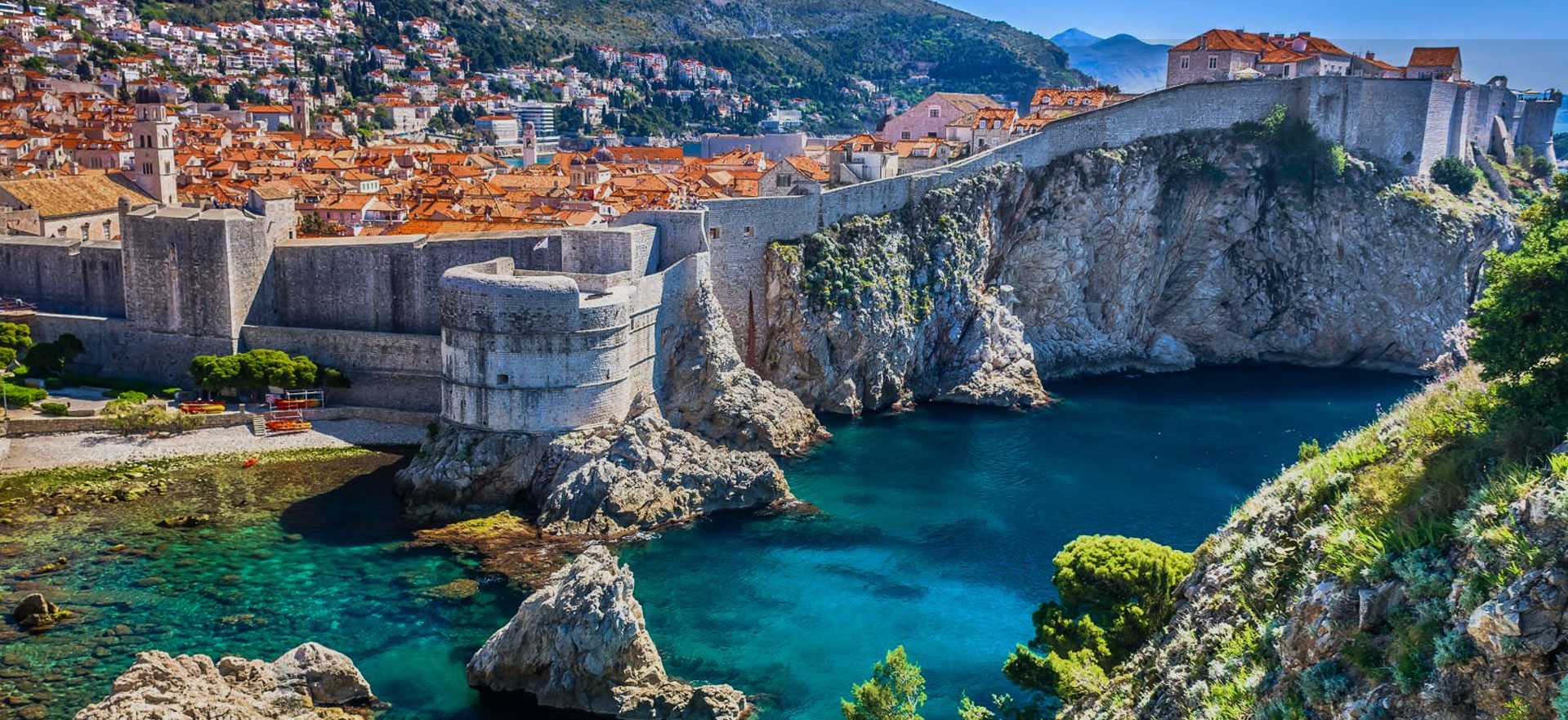
South Africa is a treasure chest of unforgettable scenery, from lofty mountains to sun-baked deserts and dramatic coastlines washed by the Atlantic and Indian oceans. Its game viewing equals the best in Africa, and where else can you find both penguins and elephants?
Overshadowed by dramatic Table Mountain and surrounded by the Atlantic, Cape Town is one of the world's most picturesque cities. You can sample fine wine under the grapes in the tranquil winelands, while the pretty Garden Route offers country towns, lagoons and forests to explore. The Wild Coast boasts isolated beaches, rocky coastline and traditional rural villages, and the resorts along the KwaZulu-Natal coast offer lots of family seaside fun.
Inland are the intriguing and moving battlefield sites that lay testament to the Anglo-Boer war. Here too rise the Drakensberg Mountains where vultures ride on the thermals over deeply green valleys and jagged peaks. To the east is the Kruger National Park where the thorny bush harbours the ‘Big Five' animals to see (the lion, elephant, buffalo, leopard and rhino) as well as many other fascinating animals and birds.
South Afica is bounded by the Indian Ocean to the east and the Atlantic Ocean to the west, and is bordered to the north by Namibia, Botswana, Zimbabwe, Mozambique and Swaziland and totally encloses Lesotho. South Africa has three major geographical regions, namely plateau, mountains and the coastal belt. The high plateau has sharp escarpments which rise above the plains, or veld. Despite two major river systems, the Limpopo and the Orange, most of the plateau lacks surface water. Along the coastline are sandy beaches and rocky coves, and the vegetation is shrub-like. The mountainous regions that run along the coastline from the Cape of Good Hope to the Limpopo Valley in the northeast of the country are split into the Drakensberg, Nuweveldberg and Stormberg ranges.
Following the 1994 elections, South Africa was organised into nine regions. These comprise the Western Cape with its provincial and national capital of Cape Town, the Eastern Cape with its provincial capital of Bisho, the Northern Cape with its provincial capital of Kimberley, KwaZulu-Natal with its provincial capital of Pietermaritzburg, the Free State with its provincial capital of Bloemfontein, the North West Province with its provincial capital of Mmabatho, Limpopo (formerly called the Northern Province) with its provincial capital of Polokwane (formerly called Pietersburg), Mpumalanga with its provincial capital of Nelspruit, and Gauteng with its provincial capital of Johannesburg.
South Africa has a vivid history. Apartheid was broken down in 1990 by President FW De Klerk, and jailed ANC leader Nelson Mandela was released after 27 years of imprisonment. In the first democratic elections to be held in South Africa, Mandela became president in 1994. The story is told in the excellent museums in Johannesburg, by far the most vibrant of the country's cities with a rich cultural heritage.
Apartheid activist Archbishop Desmond Tutu named the newly integrated South Africa the ‘Rainbow Nation'. It is a fitting name for a country with 11 official languages and people of all colours, races and creeds, living in a vividly coloured and sculpted landscape. It is no wonder then that its cities are so cosmopolitan.
KEY FACTS
Location: Southern Africa
Population: 47.4 million
Capital: Pretoria (administrative). Cape Town (legislative). Bloemfontein (judicial).
Language Spoken: The official languages are Afrikaans, English, isiNdebele, isiXhosa, isiZulu, Sepedi, Sesotho, Setswana, Siswati, Tshivenda and Xitsonga.
Country Dialling Code: +27
Currency & Money: Rand (ZAR; symbol R)
Money can be changed at banks, bureaux de change and some hotels. Proof of identity may be requested; therefore, it is advisable to carry a passport. Visitors are restricted to bringing in and taking out a maximum of R5000 in cash. MasterCard and Visa are preferred. American Express and Diners Club are also widely accepted. ATMs are available all over the towns and cities including shopping malls and petrol stations, and accept all international debit and credit cards. Almost all hotels, shops and restaurants, and even national parks and game reserves accept credit cards. They are not accepted at petrol stations, however. Petrol must always be paid for with cash. Traveller's cheques are valid at banks, hotels, restaurants and some tourist-orientated shops. To avoid additional exchange rate charges, travellers are advised to take traveller's cheques in Pounds Sterling or US Dollars. Currency Restricyions apply.
Weather: South Africa has been favoured by nature with one of the most temperate climates on the African continent, and plenty of sunny, dry days. The main factors influencing conditions are altitude and the surrounding oceans. Basically, the farther east you go, the more handy your rain-gear becomes, but there are also damp pockets in the south-west, particularly around Cape Town. The coast north from the Cape becomes progressively drier and hotter, culminating in the desert region just south of Namibia. Along the south coast the weather is temperate, but the east coast becomes increasingly tropical the further north you go. When it gets too sticky, head for the highlands, which are pleasant even in summer. The north-eastern hump gets very hot and there are spectacular storms there in summer. In winter the days are sunny and warm.
WHEN TO GO
South Africa can be visited comfortably any time. Winter (June to September) is cooler, drier and ideal for hiking and outdoor pursuits. This is also the best time for wildlife-watching. Spring is the best time to see vast expanses of Northern Cape carpeted with wildflowers. More of a consideration than weather are school holidays when waves of vacation-hungry South Africans stream out of the cities, with visitors from Europe and North America adding to the crush. Accommodation is heavily booked, and prices can more than double. It's essential to book in advance. On the plus side, the high summer months offer some great festivals, including the Cape Town New Year Karnaval , and Swaziland's Incwala ceremony.
TOP THINGS TO DO
• Stare out from atop Cape Town's Table Mountain, the famous flat-topped mountain with views across the peninsula to the Atlantic Ocean. You can walk up or take the dizzying Aerial Cableway (website: www.tablemountain.net).
• Explore South Africa's 13 major wine-producing regions, following their signposted wine routes. Wine estates offer tastings beneath the vines or in old Cape-Dutch whitewashed mansions and many have excellent restaurants (website: www.winelands.co.za).
• Drive the scenic Route 62 through the Breede Valley area, and the charming little towns of Tulbagh, Worcester, Wellington and Ceres, which all have fine old buildings, interesting small museums, beautiful scenery, vineyards and fruit orchards (website: www.route62.co.za).
• Marvel at whales from June to September at Hermanus, the best place in South Africa to watch whales. Walker Bay holds a Whale Festival annually during the last week of September (website: www.hermanus.co.za).
• Dive off the coast of KwaZulu-Natal. It is particularly popular in Sodwana Bay. The offshore Aliwal Shoal and Protea Banks are some of the best dive sites in South Africa, while wreck diving is widespread around the Cape.
• Surf at Jeffrey's Bay (J-Bay) near Port Elizabeth, which is home to Supertubes - considered by surf rats as the world's best right hand point break (website: www.surfingsouthafrica.co.za).
• Bungee jump from one of the world's highest drops - the bridge over the Blaukrans River, Western Cape. At 216m (709ft), this jump is more than twice as high as the jump over the Zambezi River near Victoria Falls (website: www.faceadrenalin.com).
• Play a round of golf at one of the hundreds of courses across South Africa. Many are in scenic locations and several have been designed by one of the greatest golfers of all time, South African Gary Player (website: www.golfinginsouthafrica.co.za).
• Watch the West Coast and Namaqualand explode into blossom as wild flowers blanket the landscape between midAugust and midSeptember. The West Coast National Park is one of the best places to see the phenomenon (website: www.namaqualand.com).
• Hike through beautiful mountain ranges, scenic game reserves and challenging wilderness. There are hundreds of trails through the Drakensberg, the Otter Trail is multi-day hike along the coast or you can simply walk up Table Mountain (website: www.hiking-south-africa.info).
• Take the ferry to the notorious Robben Island prison in Cape Town's Table Bay, where Nelson Mandela and many other anti-apartheid activists were imprisoned. Ride around the island on an old prison bus and peek inside Mandela's cell (website: www.robben-island.org.za).
• Cage dive with great white sharks in Gansbaai in the Western Cape. Dyer Island, with its penguins, seals and large game fish is the natural hunting ground for sharks (website: www.whitesharkdiving.com).
• Take a tour of a township, the areas where blacks were forcibly relocated during apartheid, and experience the vibrancy and sense of community. Tours run from most major cities; Soweto in Johannesburg and the Cape Flats in Cape Town are most popular.
• Enjoy South Africa's world-renowned beaches, such as popular Plettenberg Bay; Durban's city beach the Golden Mile; South Coast family beach resorts Amanzimtoti, Scottsburgh, Port Shepstone and Margate; or join the beautiful people at Cape Town's impossibly trendy Camps Bay.
TOP THINGS TO SEE
• Walk around Cape Town's main hub, the Victoria and Alfred Waterfront, a beautifully restored old Victorian harbour which offers free entertainment, and a wide variety of shops, museums (including the excellent aquarium), taverns and restaurants (website: www.waterfront.co.za).
• Explore the relics of colonial government, centred on Cape Town's Government Avenue, with fine old buildings and museums, including: the Parliament Buildings; Groote Kerk (mother church of the Dutch Reformed faith); the National Museum; the National Gallery; Bertram House; and centuries-old Company's Garden.
• See the largest colony of jackass penguins to live on the African mainland at Boulders Beach in Simonstown. The penguins live on a protected beach strewn with boulders and visitors can watch them from a boardwalk (website: www.sanparks.org).
• Enjoy South Africa's almost 24,000 species of flowers, many of which can be seen in the world-class and extraordinarily beautiful Kirstenbosch National Botanical Gardens, created by Cecil Rhodes in 1895 on the lower slopes of Table Mountain (website: www.sanbi.org).
• Venture into Addo Elephant National Park to track down herds of easily-seen elephant and other game, including black rhino, buffalo and antelope. Excellent private reserves nearby include Shamwari, which has upmarket accommodation plus elephants, lions, leopards, rhino and buffalo (websites: www.addoelephantpark.co.za; www.shamwari.com).
• See the only place in the world where hippos, crocodiles and sharks share the same lagoon at Greater St Lucia Wetland Park, which is bordered by giant dunes, beaches and tropical reefs. It also has superb birdwatching and diving (website: www.stlucia.org.za).
• Visit the huge Hluhluwe-Umfolozi National Park, which ranges from rocky hillside to open savannah and thick woodland, and supports some 86 mammal and around 425 bird species. There are more rhinos here than anywhere else on earth (website: www.kznwildlife.com).
• Track down the ‘Big Five' animals and thousands of other species in world-famous Kruger National Park, a massive reserve ranking among the best wildlife-watching destinations in Africa. Surrounding the park are private concessions that are less crowded but more expensive than park camps (website: www.sanparks.org).
• Go to the Pilanesberg Game Reserve, a manmade reserve and an excellent ‘Big Five' destination. It is the third-largest game park in South Africa. Adjoining it is the over-the-top resort of Sun City (website: www.pilanesberggamereserve.com).
• Walk, climb or ride your way around the Drakensberg, South Africa's largest mountain range. It is a jagged backbone of saw-toothed peaks reaching 3,000m (9,840ft) with refreshing mountain streams, ancient yellow-wood trees and Bushmen cave art (website: www.drakensberg.kzn.org.za).
• Follow the Panorama Route at the top of the spectacularly scenic Blyde River Canyon just to the west of Kruger, where there is a series of waterfalls, dramatic mountains, plunging cliffs and spectacular views of the Lowveld 1,000m (3,300ft) below (website: www.mpumalanga.com).
• Learn about the series of wars between the Zulus, Afrikaans and British (1830-1902) by exploring their bloody frontline in the northern part of KwaZulu-Natal, an area of rolling grassland and rocky kopjies (hills). Graves, memorials and monuments scatter the region (website: www.battlefields.kzn.org.za).
• Get diamond fever in Kimberley, where you'll find the Big Hole, the world's largest hand dug manmade excavation, and the Mine Museum, with its replicas of 19th-century Kimberley during the diamond rush. The De Beers Hall Museum also displays cut and uncut diamonds (website: www.kimberley.co.za).
• Learn the history of apartheid in Johannesburg's excellent new museums. The critically acclaimed Apartheid Museum tells the whole story, Soweto's Hector Pieterson Museum covers the 1976 student uprising and Constitutional Hill is on the site of a notorious jail where many blacks were sent (websites: www.apartheidmuseum.org, www.constitutionhill.org.za).
TRAVEL TO SOUTH AFRICA
Flying
The national airline is South African Airways (SAA) (website: www.flysaa.com). There are frequent direct and indirect flights by numerous major airlines from destinations throughout Europe and North America. From London to Cape Town is 12 hours and to Johannesburg is 11 hours. From New York to Johannesburg is 17.5 hours.
Main Airports
Cape Town (CPT) (Cape Town International) is 22km (16 miles) east of the city (journey time - 20 minutes). To/from the airport: Round-the-clock shuttle buses meet incoming flights. Courtesy buses are operated by some hotels. Taxis are available, with a surcharge after 2300; Touch Down Taxis are the officially authorised airport taxi firm. Facilities: Duty-free shop, car hire, bank/bureau de change, ATMs, post office, tourist information desk and restaurants/bars.
Durban (DUR) (Durban International) is 18km (11 miles) southwest of the city (journey time - 20 minutes). To/from the airport: Airport shuttle buses and taxis are available to the city. Facilities: Duty-free shop, car hire, bank/bureau de change, ATMs and bar/restaurant.
Johannesburg (JNB) (OR Tambo International) is 22km (14 miles) east of the city (journey time - 35 minutes). To/from the airport: Shuttle bus services and taxis to Pretoria and Johannesburg are available. Courtesy coaches are operated by major hotels within the vicinity of the airport. Facilities: Duty-free shops, post office, car hire, bank/bureau de change, ATMs, medical clinic, conference facilities, tourist information desk, restaurant and bar.
Port Elizabeth (PLZ) (Port Elizabeth International) is 5km (3 miles) west of the Capital Business District (journey time - 15 minutes). To/from the airport: There is an airport shuttle bus to the main international hotels in Port Elizabeth upon request. Taxis are also available. Facilities: ATM, conference facilities, information desk, restaurants and pubs, shops, pharmacy, postal services and car hire.
For more information regarding the airports, contact Airports Company South Africa (website: www.airports.co.za).
Departure Tax
All taxes are included in the price of an air ticket.
Ferry
Main ports: Cape Town, Durban, East London and Port Elizabeth.
Cruises are offered by various companies between South Africa and the Indian Ocean Islands.
Road
There are main routes into South Africa from Botswana (via Ramatlabama), Lesotho, Mozambique (via Komatipoort), Namibia, Swaziland and Zimbabwe (via Beitbridge). The major bus companies run services to and from the capital cities of neighbouring countries. Greyhound (tel: 083 915 9000; website: www.greyhound.co.za), Intercape; website: www.intercape.co.za) and Translux;(website: www.translux.co.za).
TRAVEL AROUND SOUTH AFRICA
Flying
Domestic flights are run by South Africa Airways (website: www.flysaa.com) in conjunction with their subsidiaries SA Airlink and SA Express, Nationwide (website: www.flynationwide.co.za) and by three no-frills airlines; Kulula (website: www.kulula.com), 1Time (website: www.1time.co.za) and Mango (website: www.flymango.com). Daily flights link Bloemfontein, Cape Town, Durban, East London, George, Johannesburg and Port Elizabeth. All the airlines run on these principal routes between the main cities, while South African Airways also operates between Johannesburg, Kimberley and Upington. Good deals can be found if booking early online.
Ferry
Cruise ships stop in Cape Town and Durban ports.
Rail
The principal intercity services are run by Shosholoza Meyl; website: www.spoornet.co.za/ShosholozaMeyl/index.jsp), and there are eight daily trains that crisscross the country. Trains go between Johannesburg and Musina, Durban, East London, Port Elizabeth and Cape Town and also between Cape Town and Durban. These trains are cheap, but very slow and most journeys go overnight. Simple accommodation is provided in compartments with four or six berths and there is a snack bar. Children under four years of age travel free. Children aged four to 12 years pay half fare. Premier Classe; website: www.premierclasse.co.za) runs between Johannesburg and Cape Town twice a week. This is a little nicer than the regular train with a formal dining car and extras such as gowns and toiletries.
Luxury trains
The Blue Train; website: www.bluetrain.co.za) and the Pride of Africa; website: www.rovos.co.za) offer luxurious cabins with baths and digital entertainment, plus gourmet food and fine wines in the elaborate dining cars. Often dubbed 5-star hotels on wheels, they both run between Pretoria and Cape Town.
Gautrain Rapid Rail Link
This is presently under construction and when completed, in time for the 2010 FIFA Football World Cup, will link Johannesburg with Pretoria via OR Tambo International Airport; website: www.gautrain.co.za).
Road
Traffic drives on the left. There is a well-maintained network of roads and national highways in populous regions. Except for rural lanes and tracks in national parks and game reserves, most roads are paved. The exceptions are the main roads in Kruger, which are tarred and suitable for a normal car. Road signs are in English and Afrikaans. National highways link the main cities; they are denoted with an ‘N' and are toll roads. Expect to pay around R0.25 per kilometre. Many of these run into neighbouring countries. There are 24-hour service stations with convenience stores, restaurants and ATMs at regular intervals along the major routes. However it should be noted that credit cards cannot be used to pay for fuel; only cash is accepted.
Bus/coach: Various operators, such as Greyhound; website: www.greyhound.co.za), Intercape; website: www.intercape.co.za) and Translux; website: www.translux.co.za), run intercity express links across the country using modern air-conditioned coaches with onboard toilets, movies and refreshments. Be aware, however, on long distances the buses travel overnight so you may arrive at your destination at an inconvenient hour. Bus tickets can also be booked through South Africa's national reservations ticketing system, Computicket (website: www.computicket.co.za), which also has kiosks in the larger shopping malls.
The Baz Bus; website: www.bazbus.com) is a hop-on, hop-off bus service that runs between Cape Town and Durban and between Durban and Pretoria via Johannesburg on two routes; one via the Drakensberg and one via Swaziland. It picks up and drops off passengers at backpackers' hotels.
Taxi: Available throughout the country, at all towns, hotels and airports, with rates for distance and time. For long-distance travel, a quotation should be sought.
Car hire: To hire a car, travellers must have a valid driving licence. Self-drive and chauffeur-driven cars are available from both international and local car hire companies at most airports and in major city centres.
Regulations: In non-residential areas, speed limits are 120kph (75mph) and 60kph (35mph) in built up areas. Overtaking is permitted in any lane, including the hard shoulder. Speed cameras are common and fines for speeding and drunk driving are very heavy. It is illegal to carry petrol other than in built-in petrol tanks. It is compulsory to wear a seat belt and obligatory that all vehicles carry two red triangles to be placed 20m (66ft) in front and behind the vehicle in the event of a breakdown.
Emergency breakdown service: Automobile Association (AA); website: www.aa.co.za).
Documentation: An International Driving Permit is not required, and drivers can use a licence from their home country as long as it is in English. Generally the minimum age is 25 but with some companies it is 21.
Note: Visitors are advised to avoid the Berea and Hillbrow areas of Johannesburg. There have been a number of muggings around the Rotunda Bus Terminal in the city centre.
Travel in Towns and Cities
There are bus networks in all the main towns. These are run in Cape Town by Golden Arrow, in Durban by Myna, and in Johannesburg by Metrobus. Fares are zonal, with payment in cash or with 10-ride pre-purchase ‘clipcards' from kiosks.
There is an urban train network Metrorail in the larger cities, which is used by commuters. These trains are generally not recommended to visitors due to a high crime risk.
Minibus taxis are also found in all South African towns. These, although cheap and very fast, should be used with care as they are driven rather recklessly.
For ordinary taxis, fares within the city areas are fairly expensive. Taxis do not cruise and must be ordered by phone. Taxi drivers expect a 10% tip.
POPULAR PLACES TO VISIT
Cape Town: is a beautiful city with plenty of grandeur with its striking Table Mountain backdrop, its glorious beaches and enchanting vineyards, its rugged landscapes and its strange and wonderful plants and animals. Cape Town is famed for its hospitality: its mix of trendy establishments matches up favourably any other cosmopolitan centre. There's a lively cultural scene, particularly when it comes to music, which seems to pervade every corner of the city. The general ambience is open-minded and relaxed.
Johannesburg: is a city of astonishing contrasts; a huge metropolis where opulent wealth and desperate poverty live side by side. It is the intriguing, dynamic heart of this turbulent country. If you want to see the real South Africa - and try to understand it - Jo'burg has to be on your itinerary. Jo'burg, Jozi, eGoli or 'the city of gold' (never Johannesburg) is by far the largest city in South Africa. It's brash, fast-growing and often ugly, but it has got wealth, energy and a beautiful climate. If you take reasonable precautions and listen to the locals, you can enjoy it in safety.
Jeffery's Bay: area boasts some of South Africa's wildest coastline backed by some of Africa's most spectacular sub-tropical rainforest. Once a sleepy hollow, J-Bay is now a flashy town with rampant development: low-rise apartment blocks, resorts and cafes are becoming the norm. But despite the yuppification, J-Bay remains a surfer's town through and through.